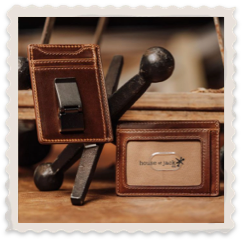
Why Front Pocket Wallets Are Better for Your Back & Posture
Key Takeaways
- Back pocket wallets tilt your hips and can irritate the sciatic nerve, causing buttock or leg pain and messy posture.
- Front pocket wallets keep your hips level and ease long sits like driving, flights, and desk work.
- Go slim with the Rule of 6: 1 debit, 1–2 credit, driver’s license, and 2 extras max plus a few bills. Less bulk means less strain and better posture.
- Make it a habit to keep back pockets empty before you sit to avoid nerve pressure.
- Pair the switch with basic feet flat, hips level, lumbar support, and quick movement breaks.
You don’t need a file cabinet in your pocket and an edited carry supports a simplified minimalistic life. Stop sitting on your wallet, your back will thank you. Low back pain is the leading cause of disability worldwide. Adults often sit 9–11 hours a day, and about one in four sit more than 8, so small posture mistakes add up fast.
It seems that carrying a wallet in the back pocket can set off one-sided buttock or leg pain during long sits and the discomfort often eases when the wallet is removed; clinicians have long described this pattern as wallet neuritis or “wallet sciatica,” linked to pressure near the piriformis and sciatic nerve.
This article shows why the back-pocket habit tilts your hips and strains your spine, why moving your wallet to the front pocket helps, and how a slim front-pocket setup plus a few posture tweaks can make sitting, driving, and flying feel better right away.
What Happens When You Sit on a Back Pocket Wallet
Sitting on a back pocket wallet lifts one hip and drops the other. That small tilt makes your pelvis uneven and your lower back works harder to hold you up. With time, this uneven pressure tightens muscles, stresses joints, and turns into a sore, tired back after long days of sitting.
There is also a nerve issue. The wallet sits over the sciatic nerve as it passes under the piriformis muscle in your buttock. Constant pressure can irritate the nerve, often called wallet sciatica. This can cause deep buttock pain that travels down the leg, sometimes with tingling or numbness that feels sharp when you shift.
The longer you sit, the worse it feels on commutes, at a desk, or on flights. The fix is simple and fast: take the wallet out before you sit or switch to a slim front pocket wallet. Keeping your hips level removes the pressure point and lets your spine stack the way it should, so you feel better during the day and after.
Research on Wallets and Back Pain
Doctors have reported “wallet sciatica” for many years. The idea is simple. A thick wallet in a back pocket can press on the sciatic nerve and irritate the piriformis muscle while you sit, causing buttock pain, numbness, or pain down the leg. Reviews and summaries in neurology journals note that this problem has been described in the medical literature since the early 1900s.
Most published evidence is case-based, but the pattern is consistent. People who sit on a bulky wallet for long periods develop one-sided sciatic-type pain, and their symptoms improve when they remove the wallet or stop back-pocket carry. Case series and reports describe this as a compressive neuropathy caused by the wallet pressing under the piriformis muscle.
Ergonomics lines up with this. Sitting on a wallet makes your hips uneven, which can strain the lower back over time. Clinical and ergonomic advice is to keep back pockets empty when you sit and to switch to a slim front-pocket carry to reduce pressure and keep your base level.
Why Front Pocket Wallets Help
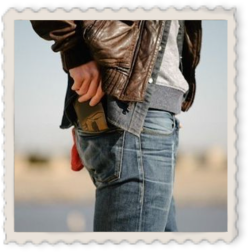
Here’s why switching to a front pocket wallet helps your back and posture:
- Keeps your hips level so your spine stays relaxed
- Takes pressure off the sciatic nerve to reduce leg and back pain
- Avoids piriformis irritation from sitting on a bulky wallet
- Feels better on long sits like driving, flights, and office work
- Encourages a slimmer carry with fewer cards and less weight
- Helps your walk feel more natural with better balance
- Simple habit that supports better posture every day
- Adds a small security boost since the wallet is harder to pickpocket
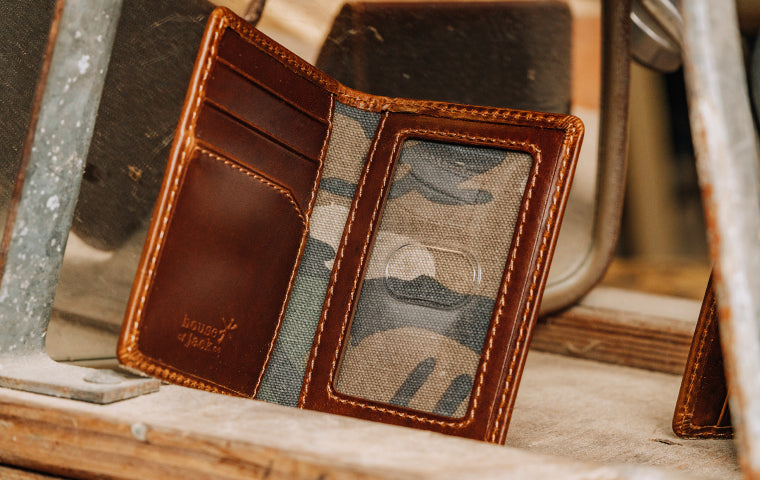
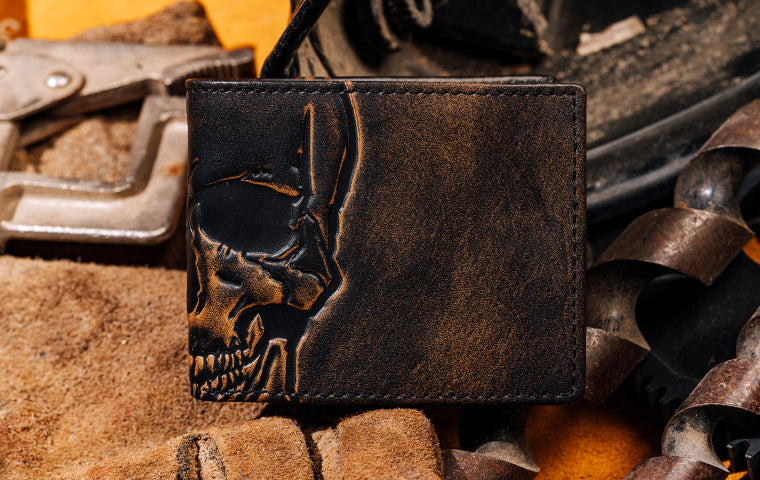
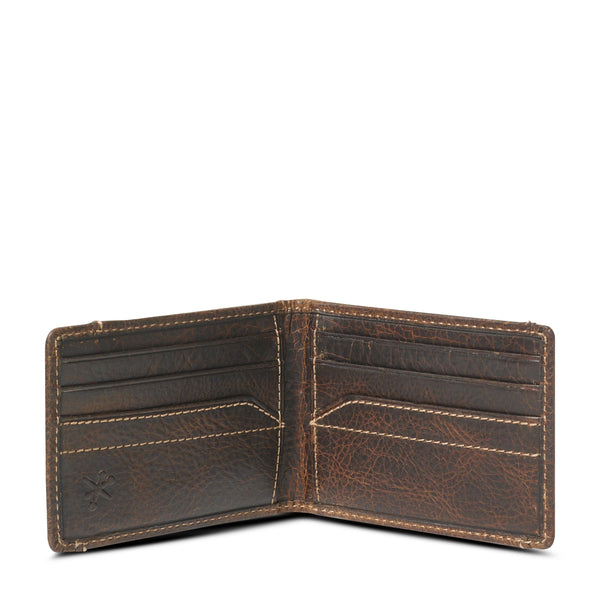
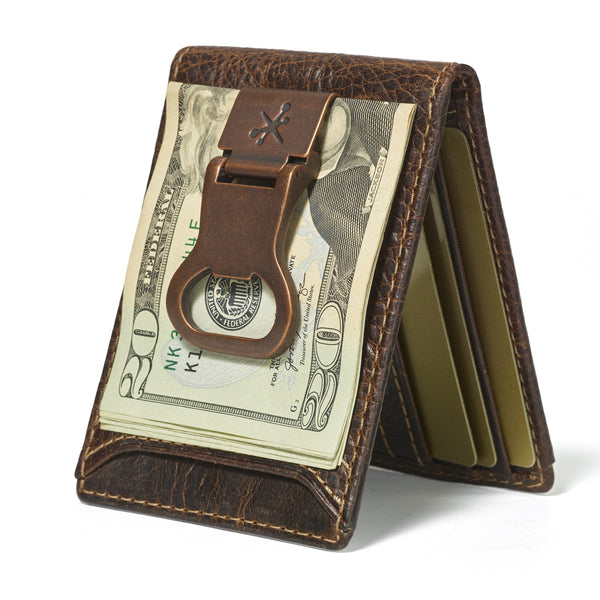
If you’re moving to a front pocket setup, choose a truly slim wallet with smooth corners and quick access. Follow the Rule of 6: 1 debit, 1–2 credit, driver’s license, and 2 extra cards of your choice max 6 cards, plus a few bills. House of Jack Co. makes minimalist front pocket styles that stay flat, carry essentials, and feel comfortable when you sit, drive, and walk.
Which Pocket Is Better for Your Back: Front or Back
| Factor | Front Pocket Wallet | Back Pocket Wallet |
|---|---|---|
| Posture | Keeps hips level and spine more neutral | Tilts one hip and can strain the lower back |
| Nerve Pressure | No direct pressure on the sciatic area | Can press on the sciatic area and trigger pain or numbness |
| Comfort | Comfortable for desks, cars, and flights | Gets uncomfortable the longer you sit |
| Everyday Use | Stays put and feels light when you walk | Can bounce, shift, and feel bulky |
| Security | Harder for pickpockets to reach | Easier target in crowds |
| Pocket bulk & Style | Slim look with fewer lines and bulges | Noticeable bulge and misshaped pocket |
| Best Practice | Use a slim wallet and carry essentials | If you insist on back pocket, remove it before sitting |
How to Switch to a Front Pocket Wallet
Lighten what you carry, choose a slim wallet, and make a simple “back pockets empty before sitting” habit to switch comfortably. A good example is the House of Jack Co. Slim Card Wallet a front pocket design that stays flat in jeans or chinos, gives quick access to your most-used card, and fits the Rule of 6 easily.
1. Clean it out first
Carry only what you use weekly: one ID, 2–4 cards, a few bills. Move loyalty cards to apps.
2. Pick a truly slim wallet
Flat profile, rounded corners, easy-access slot or pull tab. Avoid anything bulky when full.
3. Follow the Rule of 6
1 debit, 1–2 credit, driver’s license, and 2 extra cards max 6 cards total. If one goes in, one comes out. Review monthly and remove anything unused.
4. Load it smart
Most-used card in the front slot, bills folded once, weight spread evenly.
5. Choose the better side
Test both front pockets while sitting, standing, and walking. Keep the comfier side.
6. Make “back pockets empty” a habit
Before you sit in the car, desk, flights, tap-check and keep back pockets clear.
7. Use your phone to carry less
Add payment, transit, and loyalty cards to mobile wallets. Fewer physical cards = less bulk.
8. Adjust if anything aches
Lighten the load or switch sides. Persistent pain? Stop back-pocket carry and get clinical advice.
Simple Posture Tips With a Front Pocket Wallet
A front pocket wallet works best when your posture is simple and balanced. Build these small habits into your day to keep your hips even and your back comfortable.
- Empty both back pockets before you sit
- Keep both feet flat and your hips level
- Sit back and use the chair’s lumbar support
- Keep keyboard and mouse close; raise the screen to eye level
- Take a quick movement break every 30–60 minutes
- Stick to the Rule of 6 so your wallet stays thin and your hips stay level.
- For driving, set hips and knees level and support your lower back
- Skip the phone in the back pocket too—any lump under one hip tilts your pelvis and adds strain.
This article is for informational purposes and not a substitute for professional medical advice; consult a clinician for diagnosis or treatment.
FAQs
Can a wallet in my back pocket really cause pain?
Yes. A bulky wallet can press on the sciatic nerve and tilt your hips when you sit. This can trigger buttock or leg pain and pins and needles. Doctors have described this as wallet neuritis or “wallet sciatica.”
Does it always cause lower back pain?
Not always. It more often causes hip, buttock, or leg symptoms from nerve pressure. Some medical guidance notes it may tilt the pelvis and aggravate posture, but pure low back pain is less typical.
Why is a front pocket wallet better for posture?
It keeps your hips level when you sit. No lump under one side means your spine stays more neutral and you avoid extra strain.
How fast will things improve if I stop sitting on my wallet?
Many people feel relief quickly once the pressure is gone and posture improves. If pain continues or gets worse, see a healthcare professional.
Is a thin wallet safe in the back pocket?
Thinner helps, but any lump can still tilt your hips during long sits. Front pocket carry is the safer default.
Is the front pocket safer from pickpockets?
Usually yes. It is easier to feel and protect a wallet in the front pocket, so the risk is lower than in the back pocket. It is not foolproof, so use zippers or a slim design in crowds.
What type of front pocket wallet should I choose?
Pick a slim, minimal wallet that fits flat in the pocket. Carry only your ID, two to four cards, and a little cash. Less bulk means more comfort and better posture.